

In the contemporary era, the presence of artificial intelligence (AI) is perceived as a potential threat to the business world, as it can replace human workers.
The exploration of AI is not a recent development, with experts delving into this technological realm as early as the 1950s, a time predating the surge of social media, under the term “computer machinery and intelligence.”
Over the years, continuous advancements in this field have led to the creation of systems that can emulate various human tasks. The primary advantage of AI lies in its ability to significantly reduce human errors by providing enhanced accuracy and precision in work. Additionally, unlike human counterparts who require rest intervals to prevent fatigue, AI technologies can operate reliably round the clock, contributing to their efficacy.
However, similar to various other domains, the utilization of AI also presents its drawbacks. Some employees expressed concerns when the rapid expansion of this technology unfolded, fearing that it could lead to a reduction in human employment.
According to local data from 2023, more than 55% of the workforce in the Philippines has already embraced the use of generative AI in their businesses to enhance the range of services and products they offer. Consequently, 8 out of 10 Filipinos were apprehensive that AI technology might displace them from their jobs.
As a public relations company, this type of situation was taken into consideration, recognizing that the industry predominantly involves creating written content for clients and brands, a realm increasingly influenced by the prevalence of AI in today’s era.
The ongoing technological advancements in this age should not be perceived as a threat leading to a reduction in the human workforce within a company, as there will always be a requirement for the human touch in various aspects of a business.
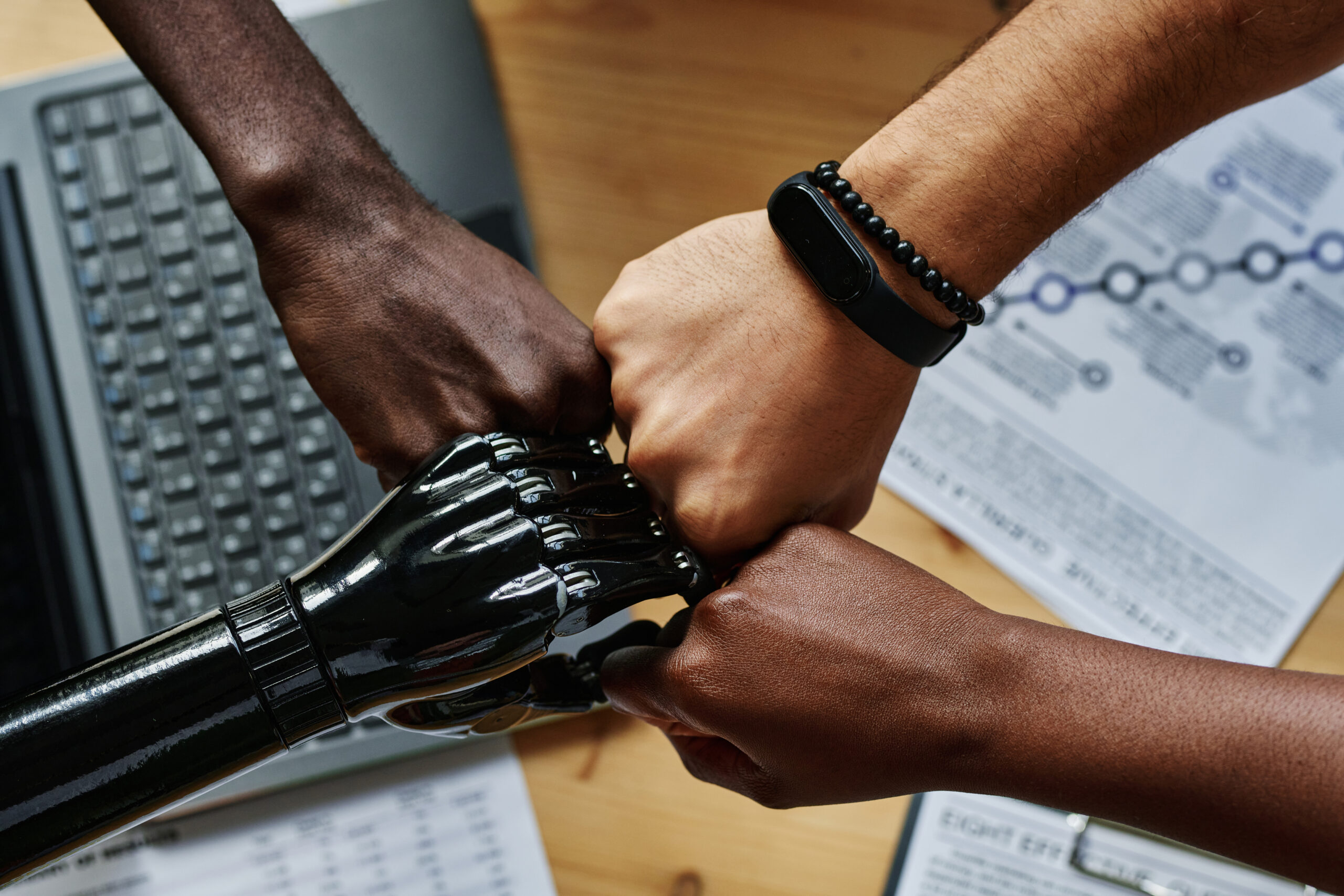
Undoubtedly, AI possesses the capability to learn and think akin to humans, yet it is equally undeniable that technology will perpetually rely on human assistance to function. Attaining desired outcomes necessitates a collaborative effort between humans and technology, emphasizing the importance of maintaining a balance in their utilization.
If you would like to seek help with topics regarding the digital landscape, PAGEONE is an award-winning dynamic force that mainly focuses on digital publishing, public relations, and tech solutions. With PAGEONE, innovation, technology, and strategic communication will always be ensured with swift results for your business.