
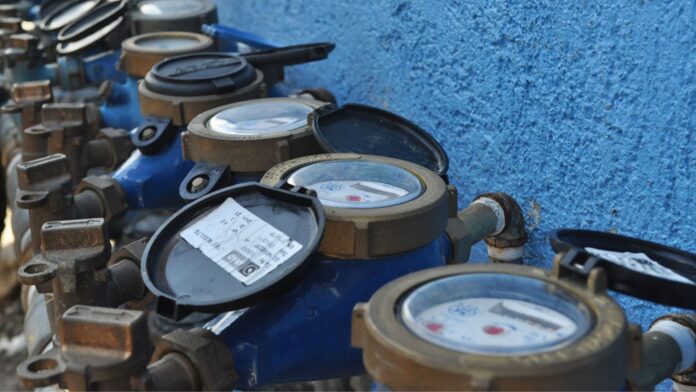
Metro Cebu, one of the country’s most economically vibrant regions, is quietly approaching a tipping point in its water situation. While not yet universally accepted as a full-blown crisis, the signals are increasingly difficult to ignore. What was once dismissed as a seasonal inconvenience is becoming a persistent challenge: water insecurity. If left unaddressed, this could endanger not only public health but also the region’s continued economic momentum.
Recent estimates suggest that Metro Cebu’s daily water demand now hovers around 400,000 cubic meters per day (400 MLD), a figure driven by rapid population growth, urbanization, and expansion in key sectors like tourism, manufacturing, and BPO services. The Metropolitan Cebu Water District (MCWD) currently supplies some portions of this demand, with the remainder coming from private wells, barangay-level systems, and informal vendors. While these supplemental sources help meet immediate needs, they are not always reliable, particularly during extreme weather conditions. With demand continuing to rise and water infrastructure struggling to keep up, fears are high that there may be water supply shortfall in the near future.
It is important to acknowledge that these challenges are not the result of neglect alone. Like many rapidly developing urban centers, Cebu faces systemic constraints: aging infrastructure, limited funding, a growing population, and increasingly unpredictable rainfall patterns. Utilities and local governments are doing what they can within these constraints, but the scale of the problem calls for new thinking and bold action.
For years, Cebu’s approach to water scarcity has relied on familiar measures: drilling additional wells, implementing rotational supply schemes, promoting conservation campaigns, and proposing long-term dam projects. While each of these has merit, they largely fall into the category of reactive rather than transformative. They address the symptoms but not the structural roots of Cebu’s water stress.
Groundwater extraction, for instance, has been a convenient stopgap, but it is already yielding diminishing returns. Saltwater intrusion and nitrate contamination, especially in low-lying areas, are now serious threats to groundwater quality. Large-scale infrastructure projects like dams can help store water, but they are expensive, time-consuming, and vulnerable to increasingly erratic rainfall.
Cebu needs a paradigm shift. It needs to start thinking like an island — surrounded by water, but not yet tapping into its most abundant source.
DESALINATION: A VIABLE, SCALABLE SOLUTION
Seawater desalination — the process of removing salt and impurities to produce clean, potable water — is emerging globally as a viable solution for water-stressed cities. It’s already a cornerstone of water supply in countries like Israel, Saudi Arabia, and Singapore. The Philippines, with over 36,000 kilometers of coastline and hundreds of coastal communities, is well-positioned to scale up this technology.
Truthfully, desalination isn’t a magic bullet. It involves significant energy inputs and relies on membrane-based filtration systems that require regular chemical treatment. However, ongoing innovations and stricter environmental safeguards are helping mitigate these operational challenges, especially when paired with renewable energy sources.
What’s important now is to recognize that desalination should be part of a diversified, climate-resilient water strategy for Cebu and other growing cities across the country.
To move from problem to progress, Cebu needs to take a multi-pronged approach:
- Integrate desalination as one of several water sources, alongside improved rainwater harvesting, wastewater recycling, and enhanced demand management.
- Protect critical watersheds such as the Central Cebu Protected Landscape, which serve as natural water catchments but remain under threat from deforestation and encroachment.
- Build institutional capacity for better governance, planning, and community engagement, ensuring that future solutions are not just technical but also inclusive.
This isn’t about choosing between traditional and novel solutions. It’s about building a portfolio that ensures water security now and in the future.
A MOMENT FOR LEADERSHIP
The question is no longer whether Cebu has a water problem. The question is whether it’s ready to lead in solving it.
Desalination, while not a cure-all, represents a bold and forward-looking step in addressing Cebu’s growing water needs. When paired with nature-based solutions, smarter governance, and improved infrastructure, it can become a cornerstone of a sustainable and inclusive water system.
We are, after all, an island nation surrounded by water. It’s time we learn how to harness what we have not just geographically, but strategically.