
In August 2022, a single controversy wiped billions off the value of one of the country’s most recognizable brands.
It wasn’t a financial scandal or an operational failure. It was a reputation crisis.
A viral video, angry social media users, and a flurry of headlines questioning the brand’s integrity created a perfect storm.
Within days, stock prices dipped, customers swore off its products, and lawmakers demanded investigations.
The lesson? Reputation can unravel faster than any balance sheet.
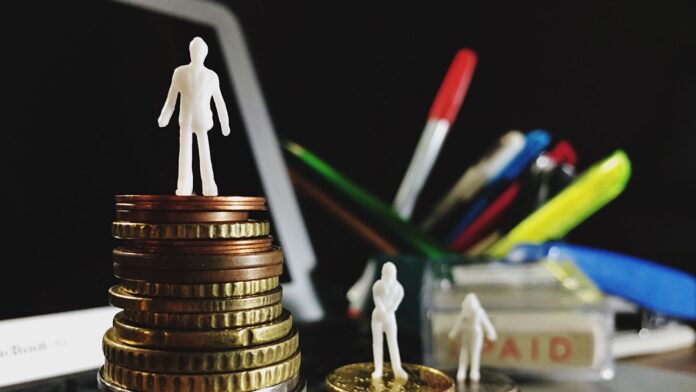
This is why I argue that we need to start thinking of reputation not as a mere PR concern but as a form of capital: one as critical as financial, human, or intellectual capital.
I call this Reputation capital: the accumulated trust, goodwill, and credibility that allow organizations to survive crises, outperform competitors and thrive in complex environments.
In academia, reputation has been framed as an intangible asset that reduces transaction costs (Fombrun, 1996), builds competitive advantage (Barney, 1991) and enhances organizational legitimacy (Suchman, 1995). It is linked to social capital theory, where trust and networks provide organizations with resilience and access to resources (Nahapiet & Ghoshal, 1998).
But history offers sharper lessons that reputation functions like capital, not just image.
In the aviation industry, a video showing a passenger being forcibly removed from an overbooked flight went viral worldwide. Within two days, the airline lost more than a billion dollars in market value as investors panicked, regulators intervened, and customers threatened boycotts. What began as a single incident instantly translated into lost financial capital: proof that reputation carries measurable economic weight.
In the consumer technology sector, a leading smartphone maker was forced to recall millions of devices after reports of phones catching fire dominated headlines and social media feeds.
Airlines banned the product, regulators demanded recalls, and memes mocking the brand went viral. The company lost billions in direct costs and saw its market value tumble, all because consumer trust in its product’s safety collapsed.
Both cases show that reputation is not a “PR issue.” It is capital. It can add or subtract billions overnight, shape investor confidence, and determine whether a company weathers a crisis or suffers long-term damage.
The four dimensions of reputation capital
To move from abstraction to action, we must break reputation capital into dimensions that can be tracked, analyzed and grown. Drawing from academic models (Fombrun & van Riel, 2004; Barnett et al., 2006) and corporate practice, I propose four key dimensions:
1. Performance capital – How well the organization delivers on its promises.
• Financial results, product/service quality, operational reliability.
2. Relational capital – The trust and goodwill of key stakeholders.
• Employee engagement, customer loyalty, community support, investor sentiment.
3. Integrity capital – The organization’s ethical and governance standing.
• ESG performance, compliance records, ethical leadership, transparency.
4. Resilience capital – The ability to withstand and recover from reputational shocks.
• Crisis preparedness, narrative agility and speed of reputation recovery.
When combined, these dimensions create a Reputation Value Index (RVI): a composite score that quantifies an organization’s reputation capital at any point in time. Think of it as a “balance sheet of trust.”
Why current tools fall short
If reputation capital is so critical, why are companies still managing it so poorly?
Because most reputation management tools today are reactive and fragmented:
Media monitoring tells you what’s being said but not its business impact.
ESG ratings measure sustainability but don’t account for employee or customer trust.
PR metrics evaluate campaigns but not long-term reputation value.
These tools fail to provide a single, boardroom-ready view of reputation capital. Worse, they can’t predict reputational risks or simulate how key decisions might affect an organization’s trust reserves.
From PR to reputation capital management
Reputation capital must be measured, invested in, and safeguarded like any other form of capital. This requires three critical shifts:
1. Measurement: build a Reputation Value Index that captures the four dimensions across performance, relationships, integrity and resilience.
2. Prediction: use AI-driven scenario modeling to anticipate the reputational impact of corporate actions, controversies and crises.
3. Action: develop playbooks for protecting and growing reputation capital, treating it as a board-level priority.
Imagine being able to forecast the reputational fallout of a controversial product launch before it happens.
Imagine quantifying the return on investment of CSR or ESG initiatives not only in media mileage but in measurable gains in trust and goodwill.
That is the promise of a reputation capital framework: foresight, not hindsight.
The call to action
The age of “gut feel PR” is over. In its place, data-driven reputation capital management must emerge, integrating real-time analytics, ESG insights, AI-powered predictions and crisis simulations.
Global players in finance have already proven this logic by treating risk as capital and building systems to quantify and manage it. Why should reputation, an equally high-stakes asset, not be managed with the same rigor?
For Philippine boardrooms, the implications are clear. Stakeholders, from investors and customers to regulators and communities, are quicker to punish and slower to forgive. A misstep today is amplified tomorrow and memorialized forever.
Reputation capital is no longer a vanity metric. It is the strongest currency an organization can hold: the store of trust that determines whether your business merely survives… or thrives.
Because if reputation is currency, the question for every CEO is simple:
How much are we really worth?