
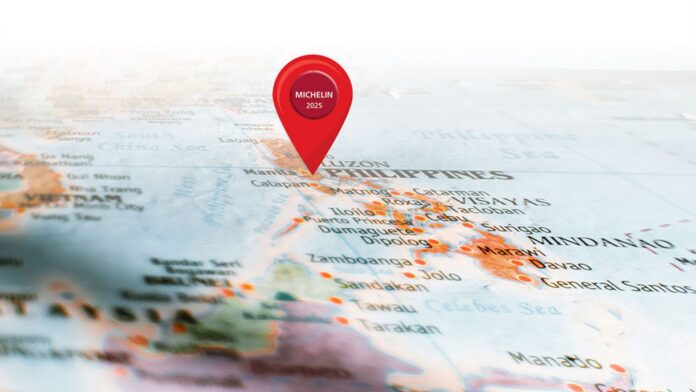
Nine Philippine restaurants have just earned Michelin stars — our first in history. The announcement electrified social media and dominated headlines: Filipino cuisine has finally arrived.
But through a postcolonial lens, that statement itself demands interrogation: arrived where, and according to whom? Why does our sense of arrival still depend on acknowledgment from the West?
The Michelin Guide, a 125-year-old French institution, is perhaps the most powerful arbiter of global taste. To earn a star is to be canonized into a system that has defined and refined the world’s culinary hierarchies for more than a century. It is both validation and assimilation, a moment of triumph that also mirrors our lingering colonial anxieties.
The Michelin system was born in early-20th century France, in the same cultural space that produced haute cuisine: a model of dining built on hierarchy, precision, and ritual. The star system was never neutral; it encoded an aesthetic of refinement rooted in European values of control, exclusivity, and restraint.
When Filipino restaurants such as, among others, Helm, Toyo Eatery, Gallery by Chele, or Hapag succeed within this framework, they are not only cooking; they are performing legibility to a Western system of evaluation. The degustation format, the choreography of service, the minimalist plating, the architecture of silence are signatures of an imported language of taste.
We begin to see not only the creativity and technical mastery of our chefs, but also the enduring power of colonial frameworks to define what counts as “excellent.”
This does not diminish the achievement of our chefs; on the contrary, it highlights their brilliance in navigating and subverting these codes. But it also reminds us that the Michelin model remains a gatekeeper of global culinary prestige, one that privileges form over soul, ritual over chaos, and often Western definitions of refinement over local expressions of authenticity.
THE POLITICS OF TASTE
Pierre Bourdieu wrote that taste classifies, and it classifies the classifier. Taste, in other words, is not just personal preference; it is a social construct that reflects power and reproduces privilege.
Michelin’s arrival in Manila and Cebu therefore does not simply mark a milestone for Philippine gastronomy; it marks our formal entry into a global system of permission. It tells us, once again, that excellence must be recognized elsewhere before it feels real here.
This logic of validation is familiar. It echoes our colonial conditioning: that we become beautiful when crowned by Miss Universe, artistic when exhibited in Venice, and world-class when recognized by Michelin. It is the same reflex that makes us crave global applause before we celebrate local genius.
So while the stars shine brightly, they also cast long shadows, illuminating our brilliance but exposing our insecurities.
The irony is that Filipino cuisine has never needed validation to be great. It has always been a living archive of our history: Malay roots, Chinese trade, Spanish colonization, American occupation, and a global diaspora all simmering in one pot.
Our food is messy, layered, syncretic; everything that Western culinary orthodoxy once rejected but now calls fusion. The carinderia in Pampanga that turns pork blood into poetry, the fisherman in Bohol who ferments fish with salt and sunlight, the lola in Iloilo who perfects her batchoy without ever writing down a recipe; they, too, are Michelin-class, only unacknowledged.
And yet, we rarely see them that way. Colonial conditioning has taught us that prestige lies in imported rituals, i.e., the tasting menu, the curated wine list, the architectural plating. The humble, the communal, the spontaneous are dismissed as “ordinary.”
When fine dining becomes the singular benchmark for culinary greatness, we risk erasing the everyday excellence that truly sustains our culture.
CULTURAL CAPITAL AND CULINARY PERMISSION
From Bourdieu’s cultural capital to Edward Said’s Orientalism, the logic of Western validation remains the same: it grants recognition, but always on its own terms. It decides which cuisines are worthy of admiration, and which remain curiosities to be consumed and forgotten.
Michelin’s global expansion, from Paris to Tokyo, Bangkok, and now Manila, extends not just opportunity but also oversight. It universalizes a specific aesthetic of taste and class, one historically tied to Europe’s colonial imagination.
Our participation in that system, then, is not submission, but neither is it full emancipation. It is negotiation. The Filipino chef, in this moment, becomes both artist and ambassador, innovator and interpreter, proving that our flavors can speak the language of the world while still whispering the stories of home.
Yet, as with all postcolonial negotiations, the danger lies in mistaking visibility for sovereignty.
CULINARY SOVEREIGNTY: BEYOND THE STARS
The next frontier is not more stars; it is sovereignty. Culinary sovereignty means developing our own standards of excellence, rooted in our histories, ecosystems, and ethics. It means celebrating not just who was awarded, but who was overlooked. It means recognizing that our food heritage, from kinilaw to kare-kare and pancit to pinakbet, carries wisdom that transcends the tasting menu.
It also means building institutions of our own: Philippine-led food guides, culinary awards, and research centers that document and defend the diversity of our gastronomic culture. It means investing in farmers, food historians, culinary educators, and small restaurateurs: the ecosystem that allows talent to thrive beyond the capital and beyond the gaze of foreign inspectors.
True confidence is not born of applause. It is born of authorship, i.e., the ability to write, define, and defend our own narrative of excellence.
To be fair, Michelin’s presence brings opportunity. Food is now one of our most potent forms of soft power, a diplomacy of flavor that communicates who we are without needing translation.
The stars will draw attention, tourism, and investment. But the deeper value lies in what they provoke: a national conversation about identity, pride, and cultural ownership. If we use this moment to elevate our culinary system from dependency to agency, from imitation to innovation, then Michelin’s entry becomes not an act of colonization but a catalyst for self-definition.
After all, the world is finally looking. The question is: What story will we tell when it does?
The truth is that Filipino cuisine has always been world-class, only the world is just catching up. The arrival we should celebrate is not that of Michelin to Manila, but of our own cultural consciousness: the awakening that we do not need to be discovered to know our worth.
Michelin can award stars. But only we can define taste and class on our own terms.